Main content

WHAT IS THERMAL INSULATING COATING INSTALLATION AND ITS IMPORTANCE IN CONSTRUCTION PROJECTS?

Thermal Insulating Coating Installation is the process of applying a thermal insulating coating layer on the surfaces of construction projects to insulate, reduce heat transfer, and provide thermal comfort within the interior spaces. Thermal insulating coatings are commonly used to enhance thermal performance in construction projects, including commercial, industrial, and residential buildings.
In this process, a specialized coating material is applied to the surfaces of walls, roofs, or other structural components to create a barrier that reduces the transfer of heat. This helps in maintaining a stable and comfortable temperature inside the building while minimizing the need for excessive heating or cooling.
The importance of Thermal Insulating Coating Installation in construction projects lies in its ability to:
Improve Energy Efficiency: By reducing heat transfer through walls and roofs, thermal insulating coatings help buildings maintain a consistent temperature, leading to lower energy consumption for heating and cooling.
Enhance Comfort: These coatings contribute to a more comfortable indoor environment by minimizing temperature fluctuations and reducing the need for mechanical heating and cooling systems.
Extend Building Lifespan: Thermal insulation can protect structural elements from temperature-related stress, potentially extending the lifespan of the building.
Comply with Regulations: Many building codes and regulations require a certain level of thermal insulation to be installed in new constructions, making Thermal Insulating Coating Installation a necessity for compliance.
In summary, Thermal Insulating Coating Installation is a crucial step in construction projects that plays a vital role in energy efficiency, comfort, and compliance with building codes and standards.
WHAT IS THERMAL INSULATING COATING INSTALLATION?

Thermal Insulating Coating Installation is the process of applying a thermal insulating paint or coating onto various surfaces to enhance their thermal insulating properties and reduce surface temperatures. Thermal insulating coatings typically contain insulating and heat-resistant materials, creating a protective barrier against heat transfer through the coated surfaces.
IMPORTANCE IN CONSTRUCTION PROJECTS
The significance of using thermal insulating coatings and related technologies in construction projects is substantial and profoundly impacts performance, energy efficiency, and overall comfort within the structure. Below are key points highlighting this importance:
Insulation and Energy Savings
Thermal insulating coatings play a pivotal role in improving the insulation capabilities of surfaces. In construction projects, these coatings can help reduce heat transfer through surfaces such as walls, roofs, partitions, maintaining stable temperatures within interior spaces. This reduces the burden on heating and cooling systems, resulting in energy savings and cost reduction.
Surface Protection
Thermal insulating coatings provide protective layers for painted surfaces, shielding them from high temperatures, UV radiation, and other environmental factors. This prolongs the lifespan of the coated surfaces, minimizing deterioration and weather-related damage.
Versatility in Applications
Thermal insulating coatings can be applied to various surface types and materials, including metal, wood, concrete, plastics, and more. This versatility allows for flexible material and design choices, making it applicable in a wide range of construction projects.
Comfortable Working Environments
In commercial construction, such as factories, warehouses, or office spaces, the use of thermal insulating coatings helps create more comfortable working environments. By reducing surface temperatures, these coatings prevent uncomfortable glare and enhance comfort for occupants.
Performance and Sustainability
Properly executed thermal insulating coating installation requires technical expertise and knowledge to ensure performance and durability. However, when applied correctly, thermal insulating coatings can offer long-term performance, protecting surfaces and optimizing construction projects.
In summary, thermal insulating coating installation significantly contributes to thermal insulation, energy efficiency, and surface protection in construction projects. Its use can improve living and working environments while providing sustainable solutions for temperature and energy management.
PREPARING TOOLS AND PERSONNEL

During the thermal insulating coating installation process, preparing tools and personnel plays a critical role in ensuring performance and quality of work. This section will introduce the importance of tool and personnel preparation in the thermal insulating coating installation process.
PREPARING TOOLS AND EQUIPMENT BEFORE CONSTRUCTION:
In the process of thermal insulating coating installation, thorough and accurate preparation of the necessary tools and equipment is a crucial step to ensure a smooth and high-quality construction process. This section will introduce the importance of tool preparation before thermal insulating coating installation.
LISTING THE TOOLS AND MATERIALS REQUIRED FOR CONSTRUCTION
Before commencing the thermal insulating coating installation process, creating a detailed list of the required tools and materials is essential. This list may include:
Thermal insulating coating and additives.
Various brushes, paint rollers, or spray equipment used for applying the insulation layer.
Surface preparation tools, such as sandpaper, wire brushes, or power washers.
Safety equipment like safety glasses, masks, gloves, and protective clothing.
Tools for quality inspection of the coating after completion.
THE IMPORTANCE OF PROPER TOOL PREPARATION:
Proper tool preparation is a critical factor in ensuring a smooth and efficient construction process. Failing to ensure the readiness of essential tools can lead to delays, wastage of time, and resources.
WORKFORCE DURING CONSTRUCTION
In the process of thermal insulating coating installation, the workforce plays a crucial role in carrying out tasks accurately and efficiently. This section will introduce the importance of the construction personnel and how to manage them to ensure a successful construction process.
DETERMINING ROLES AND RESPONSIBILITIES OF TEAM MEMBERS

In a thermal insulating coating installation project, each team member has a vital role and corresponding responsibilities to ensure that the construction process is efficient and of high quality. Below are key roles and their respective responsibilities within the construction team:
Project Manager: Responsible for overall project management, monitoring progress, finances, and negotiating with clients regarding issues during construction.
Thermal Insulating Coating Specialist: Possesses in-depth knowledge of thermal insulating coating technology, responsible for planning and executing the construction, ensuring the highest quality.
Painters: Execute the insulation layer application following guidance from the thermal insulating coating specialists.
Surface Preparation Team: Remove any dirt or grease from surfaces before painting, ensuring a clean and pristine substrate.
Safety Compliance: Ensure that all safety measures are adhered to throughout the construction process.
UNDERSCORING THE ROLE OF SKILLED AND TRAINED PERSONNEL:
Having individuals on the team with expertise and skills in thermal insulating coating installation is of utmost importance. These individuals can ensure that the construction process is carried out correctly and achieves optimal performance.
Organizing and managing personnel effectively, as well as ensuring the readiness of the necessary tools and materials, are essential factors in ensuring that thermal insulating coating installation proceeds efficiently and with high quality.
PREPARING SURFACES FOR THERMAL INSULATING COATING APPLICATION
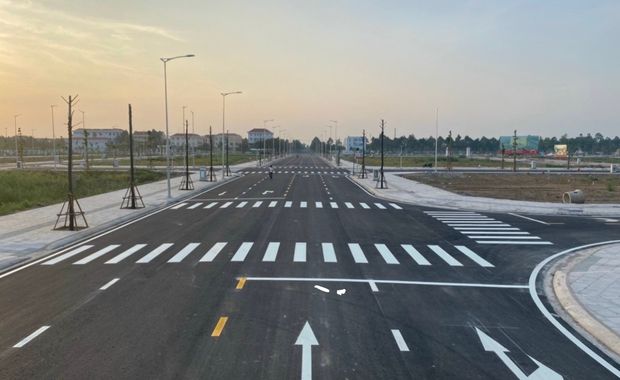
Preparing the surfaces before proceeding with thermal insulating coating application is a crucial step to ensure that the coating adheres effectively and maintains its insulation properties under high-temperature conditions. Surface preparation involves tasks such as cleaning, removing oils and greases, and addressing cracks and uneven surfaces.
INITIATING SURFACE CLEANING
Cleaning the surface is an essential step in the preparation process before painting, especially when applying paint to surfaces that are oily, dirty, or contaminated with foreign substances. The cleaning process ensures that the surface is clean, smooth, and has good adhesion properties, thereby enhancing the effectiveness of the paint layer and ensuring a high-quality end result.
TECHNIQUES FOR CLEANING AND PREPARING THE SURFACE
Before proceeding with thermal insulating coating application, cleaning and preparing the surface is a crucial step to ensure that the coating adheres well and achieves optimal performance. Below are some common techniques for cleaning and preparing the surface:
Surface Cleaning: Use tools such as stiff brushes, sponges, or wiping cloths to remove dirt, oil, grease, and other contaminants from the surface. This helps create conditions for better adhesion of the coating.
Eliminating Obstacles to Coating: If there are cracks, peeling, or small defects on the surface, address them to ensure they do not affect the quality of the coating. This may involve sanding, filling, or using specialized tools.
Use of Specialized Surface Cleaning Solutions: Surface cleaning solutions can effectively remove stubborn residues, oils, and contaminants that cannot be removed manually. These solutions help create a clean and paint-ready surface.
IMPORTANCE OF ASSESSING SURFACE CONDITIONS FOR GOOD ADHESION
Assessing the condition of the surface before proceeding with thermal insulating coating application is essential to ensure that the surface is ready for the coating process. This process plays a vital role in ensuring the smoothness, uniformity, and adhesion of the paint layer, thereby ensuring that the final painted result meets quality requirements.
Checking for Cracks and Peeling: Inspect and ensure that the surface is free from cracks, peeling, or any irregularities. These areas need to be addressed before painting to avoid aesthetic issues and lack of finish.
Assessing Surface Smoothness and Uniformity: Thoroughly examine the surface to ensure that there are no patches, small cracks, or foreign substances. A smooth and uniform surface allows for even distribution of the paint and better performance.
Please note that performing proper cleaning and surface preparation, along with assessing surface conditions before thermal insulating coating application, are essential steps to ensure that the coating process is carried out on the best possible surface and achieves the desired paint result.
THERMAL INSULATING COATING APPLICATION PROCESS

Applying thermal insulating coatings to surfaces not only enhances their aesthetic appearance but also provides protection against high temperatures and harsh environmental factors. The thermal insulating coating application process is a complex procedure that includes surface preparation, applying a primer coat, applying the thermal insulating coat, and final inspection steps. Below are the details of the thermal insulating coating application steps:
STEP 1: APPLYING THE PRIMER COAT
The first step in the thermal insulating coating application process is applying the primer coat. The primer coat improves the adhesion of the main coating and makes the surface uniform, preparing it for the application of the thermal insulating coat.
Surface Preparation:
Before starting the application, ensure that the surface is cleaned, free of dust, oil, grease, and other contaminants. If necessary, address any cracks or unevenness on the surface.
Applying the Primer Coat:
Use suitable tools such as brushes, rollers, or sprayers to apply the primer coat to the surface. Ensure that the primer coat is evenly and uniformly applied across the entire surface.
Allow Complete Drying of the Primer Coat:
Allow the primer coat to dry completely according to the product instructions. This ensures good adhesion and uniformity for the subsequent main coating.
STEP 2: APPLYING THE THERMAL INSULATING COAT
After the primer coat has completely dried, you can proceed with applying the heat-resistant paint layer. The heat-resistant paint layer is a crucial part of providing heat resistance to the surface and creating an aesthetic finish.
Prepare the Heat-Resistant Paint Layer:
Shake the heat-resistant paint can thoroughly before use to ensure a consistent mixture of its components. If necessary, add a thinner as per the manufacturer's instructions.
Apply the Heat-Resistant Paint Layer:
Use the appropriate tool to apply the heat-resistant paint layer onto the previously primed surface. Ensure that the paint is evenly spread and that no areas are missed.
Allow the Paint Layer to Dry Completely:
Allow the heat-resistant paint layer to dry completely according to the instructions provided on the product. This ensures good adhesion and durability of the heat-resistant paint layer.
Performing the application of both the primer coat and the heat-resistant paint layer is critical in the process of heat-resistant paint application. By carefully following these steps, you can ensure that the heat-resistant paint layer is applied effectively, ensuring durability and a beautiful finish for the surface once completed.
POST-CONSTRUCTION MANUAL INSPECTION MEASURES

After completing the construction process, manual inspection is a crucial step to ensure that the work has been carried out correctly and meets quality requirements. This inspection process helps detect issues and deficiencies early on, allowing necessary corrections to be made to ensure the project's completeness and durability. Below are the measures for post-construction manual inspection:
CLEARLY OUTLINE THE POST-CONSTRUCTION MANUAL INSPECTION PROCESS
After the construction work has been completed, conducting a manual inspection is an essential step to ensure that the work has been executed correctly and meets quality requirements. This inspection process helps identify and address issues and deficiencies promptly, ensuring the project's completion, safety, and durability. Below is a detailed process for post-construction manual inspection:
1. Define Inspection Objectives:
Clearly define the objectives of the inspection process, including checking for accuracy, completeness, safety, and performance of completed construction components.
2. Perform Technical Accuracy Inspection:
Inspect each part of the construction to ensure they have been executed correctly according to technical guidelines. This includes measuring dimensions, checking positions, balance, and other technical aspects.
3. Inspect Aesthetic Completion:
Examine the aesthetic completion of the project, from overall appearance to small details. Ensure that surfaces are clean, free of cracks, dirt, and other imperfections. This also includes checking color, gloss, and overall appearance.
4. Check Safety Elements:
Inspect the safety aspects of the project by ensuring that elements such as staircases, handrails, electrical, and water systems meet safety standards. Make sure that protective measures and escape routes are implemented correctly.
IDENTIFY COMMON DEFICIENCIES AND ISSUES THAT NEED TO BE MONITORED
When conducting post-construction manual inspections after completing construction work, identifying and monitoring common deficiencies and issues is an essential part of ensuring the project's completion and quality. Recognizing these issues early helps implement timely corrective measures, thereby avoiding more significant problems later on. Here are some common deficiencies and issues to identify and monitor:
5. Identify Common Issues:
Understand common issues that often arise after completing construction, such as cracks, peeling, color and size inconsistencies. This helps identify issues that need attention and correction during the inspection process.
6. Check Construction Performance:
Inspect the performance of systems and equipment related to the construction, such as electrical systems, plumbing, heating, and cooling systems. Ensure they operate correctly and meet performance standards.
7. Record and Report:
Document all issues and deficiencies discovered during the inspection. Create detailed reports on the problems and provide illustrations or images to illustrate them. This report will assist management and the team in implementing necessary repairs and maintenance measures.
The post-construction manual inspection process plays a crucial role in ensuring the project's completion and quality. By conducting thorough inspections and addressing issues promptly, you can ensure that the completed work meets standards and requirements.
The productivity in road marking paint application plays a crucial role in maintaining and improving urban and highway transportation systems. Road marking paint not only serves directional and lane delineation purposes but also significantly contributes to enhancing safety for road users.
Concept and Applications of Road Marking Paint
Road marking paint is a type of paint used to create lines and symbols on road surfaces, parking lots, airports, and other transportation areas. This paint helps define safety levels, provide traffic guidance, and prevent unwanted collisions.
Applications of road marking paint include
Traffic Roads: Road marking paint helps define lanes, median strips, turn lanes, and stopping areas, thereby assisting in the safe and efficient control of traffic.
Parking Lots: Road marking paint is used in parking lots to indicate parking spaces, guide traffic flow, and organize parking efficiently.
Airports: In airports, road marking paint is employed to delineate taxiways, runways, and aircraft parking areas, ensuring safe and orderly operations.
Public Areas: Road marking paint is also utilized in public areas such as stadiums, beaches, and recreational facilities to provide directions and guidance to participants.
Common Types of Road Marking Paint
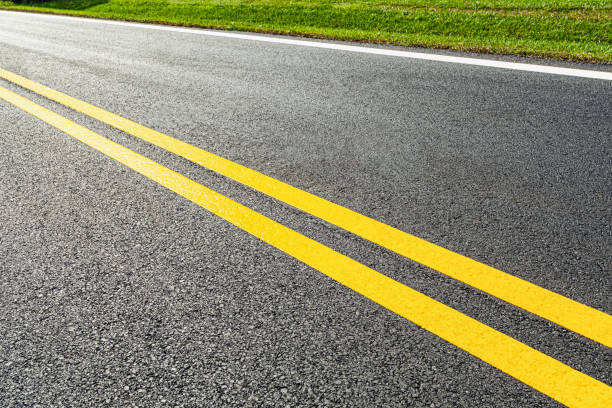
There are several common types of road marking paint used for creating lines and charts, along with their applications in various construction projects across different fields:
Thermoplastic Road Marking Paint:
Characteristics: Hard, high adhesion.
Applications: Suitable for high-traffic roads and highways.
Application Method: The paint is melted and heated to 180 - 200°C to create road markings on the road surface.
Features: Often contains glass beads and fillers to increase friction and reflectivity, enhancing safety. Pre-formed thermoplastic strips can also be used for marking.
Water-Based Road Marking Paint:
Characteristics: Water-resistant, low durability, anti-skid.
Applications: Suitable for airport runways, racetracks, parking lots, transportation terminals, block paving surfaces, and areas with no foreign objects on the surface.
Features: Available in various colors, environmentally friendly, and safe.
Solvent-Based Road Marking Paint:
Characteristics: One-component acrylic paint, high adhesion, quick-drying.
Applications: Used for airport runways, highways, bridges, guardrails, airport parking lots, parking areas, warehouses, sports fields, and many other places.
Features: Forms a hard paint film, dries quickly, and offers high durability.
These details about different types of road marking paints are helpful in understanding their diversity and applications in road and floor marking. The choice of paint type depends on the specific project requirements and the environmental conditions.
LATEST 2023 CONSTRUCTION PRICE LIST
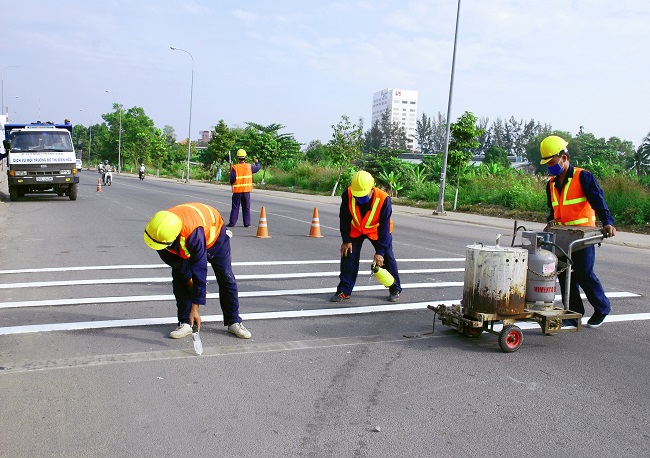
Thermoplastic paint, also known as heat-resistant paint, is a special type of paint designed to withstand high temperatures without deformation, peeling, or loss of adhesion. It plays an important role in protecting and creating safe road markings on hot surfaces such as highways, railways, industrial surfaces, and other high-temperature environments. There are many reputable and high-quality brands of thermoplastic paint available in the market for you to choose from.
FACTORS AFFECTING PRICES AND ESTIMATED FEES
The cost of road marking and floor marking construction can be influenced by various factors. Here are some important factors that can affect pricing and how estimated fees are provided:
Surface Area to Be Marked:
The area of the surface or road to be marked is a critical factor affecting the cost. Larger areas will generally require more materials and construction time.
Type of Paint and Materials:
The type of paint used for marking can vary in price and quality. Thermoplastic paint, for example, typically has a higher price but offers high adhesion and durability. Water-based paint is often more cost-effective and environmentally friendly.
Complexity of Marking Design:
If the marking design involves intricate shapes, patterns, or special symbols, this can increase the cost due to the additional time and technical requirements.
Complexity and Conditions of Construction:
Marking on challenging surfaces like mountain roads, curved roads, steep gradients, or under adverse weather conditions can increase costs due to specialized equipment and techniques required.
Geographical Location:
Prices can vary depending on the geographical location. Urban or high-traffic areas typically have higher prices due to transportation costs and increased competition.
Market and Supply-Demand:
Market conditions and supply-demand dynamics within the industry can also impact prices. If there are many projects and few contractors, prices may rise.
Technology and Equipment:
The use of advanced technologies and equipment can improve efficiency and reduce construction time but may come with higher initial costs.
For an accurate cost estimate, it's recommended to contact road marking service providers in your area directly. They will visit the site, assess the factors mentioned above, and provide you with a fee estimate based on your specific project.
CONTRACTOR OF THERMOPLASTIC ROAD MARKING WITH RELIABILITY AND PROFESSIONALISM
We would like to introduce our company as a reputable and professional contractor specializing in thermoplastic road marking. With a commitment to delivering perfection and safety in every road marking project, we take pride in our dedication and discipline throughout the execution process.
WHY CHOOSE US?
Expertise, Experience, and Successful Projects: At our company, we not only promise to provide the best service but also bring a wealth of experience and expertise to thermoplastic road marking projects. With many years of operation in the industry, we have successfully completed numerous projects, both small and large, leaving a mark of trust and excellence among our clients.
PHOTOS OF OUR ROAD MARKING PROJECTS
We are proud to be a quality-driven and trustworthy entity in the field of thermoplastic road marking. Our clients are assured not only of product quality but also of a highly professional execution process. Let us assist you in achieving high-quality and reliable thermoplastic road marking projects.
THERMOPLASTIC ROAD MARKING FOR REFLECTIVE TRAFFIC LINES
(Note: The last sentence appears to be a specific service you offer. If you need a translation of this sentence, please let me know.)
THERMOPLASTIC REFLECTIVE ROAD MARKING: AN EFFECTIVE AND SAFE SOLUTION
Thermoplastic reflective road marking has become an effective and safe solution for marking traffic lanes, providing excellent reflectivity and durability under various weather conditions. We are pleased to introduce the process of thermoplastic reflective road marking, ensuring safety and aesthetics in the traffic environment.
THERMOPLASTIC: CONCEPT AND APPLICATION
Thermoplastic is a high-temperature-resistant paint commonly used for marking surfaces exposed to heat, such as highways, railway tracks, and areas requiring reflective properties. The application of thermoplastic paint enhances visibility in low-light conditions, ensuring safety for traffic and participants.
CONSTITUENTS OF THERMOPLASTIC ROAD MARKING PAINT
Thermoplastic road marking paint typically contains components such as plastic resin, glass beads, additives for improved adhesion and reflectivity, and chemicals for heat resistance.
THE PROCESS OF THERMOPLASTIC REFLECTIVE ROAD MARKING
The process of thermoplastic reflective road marking demands precision, technical expertise, and experience to ensure the creation of high-quality, safe, and durable markings. Here are the crucial steps in this process:
WORKFORCE AND SURFACE PREPARATION
Identify the necessary workforce and prepare the surface by cleaning it, removing any dirt, grease, or hindrances.
CONDITIONS AND APPLICATION METHODS
Ensure suitable working conditions, including temperature and humidity. Thermoplastic paint is typically applied using spray or roller methods, depending on surface characteristics.
THERMOPLASTIC ROAD MARKING APPLICATION
Apply the thermoplastic paint to create the road markings according to the desired size and pattern.
CREATING REFLECTIVITY ON THE SURFACE
To achieve reflective properties, glass beads or reflective materials are added to the paint, making the road markings clearly visible in low-light conditions.
TYPES OF CURRENT THERMOPLASTIC ROAD MARKING PRODUCTS

There are various types of thermoplastic road marking paints available today, each with different features such as adhesion, durability, and reflectivity.
High Adhesion:
One of the crucial factors in road marking paint is high adhesion, ensuring that the markings do not peel or fade after usage. Thermoplastic paints are designed to have strong adhesion to road surfaces.
High Durability:
Thermoplastic road marking paint needs to withstand wear and tear from passing vehicles. High durability ensures that the markings maintain their shape and functionality over many years.
Reflective Properties:
Reflective properties are essential in thermoplastic road marking to ensure visibility and safety in low-light conditions. Glass beads or reflective additives are often added to create reflective effects.
Heat Resistance:
Thermoplastic road marking paint must withstand high temperatures, especially when used on hot road surfaces. Heat resistance prevents peeling or distortion of the paint.
Anti-Skid Properties:
Particularly important on road sections with a high risk of skidding, anti-skid properties help ensure safety for road users.
Chemical Resistance:
In industrial environments or areas exposed to chemicals, road marking paint should resist chemical impact to maintain its functionality and color.
Aesthetics:
Road marking paint should also have aesthetic appeal, enhancing the beauty of streets and the surrounding areas.
When selecting a type of thermoplastic road marking paint, it is important to carefully consider these features to ensure they match the specific needs and conditions of the project.
THERMOPLASTIC ROAD MARKING FOR VARIOUS PROJECTS
Thermoplastic reflective road marking is suitable for a wide range of projects, including highways, urban roads, airports, urban areas, and areas with high safety requirements.
COST OF THERMOPLASTIC REFLECTIVE ROAD MARKING
The cost of thermoplastic reflective road marking installation can vary based on factors such as the surface area, type of paint, surface conditions, and the complexity of the job. To get an accurate cost estimate, it is advisable to consult reputable contractors.
CONSTITUENTS AND CHARACTERISTICS OF THERMOPLASTIC REFLECTIVE ROAD MARKING PAINT
Thermoplastic reflective road marking paint is a specialized type of paint designed for road marking and creating reflectivity in low-light conditions. The chemical composition of thermoplastic paint plays a vital role in ensuring the functionality and performance of the product. Below is some information about the components and characteristics of thermoplastic reflective road marking paint:
Chemical Components
Plastic Resin: Plastic resin is the primary component in thermoplastic paint, providing flexibility and durability to the paint layer. It needs to withstand high temperatures and be compatible with other components in the paint mixture.
Glass Beads or Reflective Materials: These are crucial components for creating reflectivity in road markings. Small glass beads or reflective additives are added to the paint, and when light shines on them, they reflect the light back, making the road markings visible at night.
Fillers and Additives: Fillers and additives are incorporated into the paint to enhance durability, adhesion, anti-wear properties, and to create a smooth surface for the markings.
Coloring Agents: Coloring agents are used to give color to the road markings. For thermoplastic paint, white is often used to enhance reflectivity.
Environmental Pollution Control Agents: Especially in urban environments, environmental pollution control agents can be added to the paint to help protect the color and characteristics of the road markings over an extended period.
Characteristics of Thermoplastic Reflective Road Marking Paint:
Adhesion: Thermoplastic reflective road marking paint must have strong adhesion to road surfaces to prevent peeling or fading over a short period.
Heat Resistance: Heat resistance is a crucial factor, ensuring that the paint does not deform or peel under the influence of high temperatures from sunlight.
Anti-Skid Properties: Anti-skid properties are important for ensuring safety for people and vehicles, especially in wet or slippery conditions.
Reflectivity: Reflectivity is a key feature that aids visibility and safety in low-light conditions.
Anti-Wear and Durability: Anti-wear properties help the road markings maintain their functionality and color over extended periods of use.
Aesthetic Appeal: Aesthetic appeal contributes to the overall beauty of streets and the surrounding environment, as well as maintaining consistency in road markings.
When choosing thermoplastic reflective road marking paint, it is essential to research the composition and characteristics of the product thoroughly to ensure it meets the specific requirements and conditions of the project.
APPLICATION OF THERMOPLASTIC REFLECTIVE PAINT
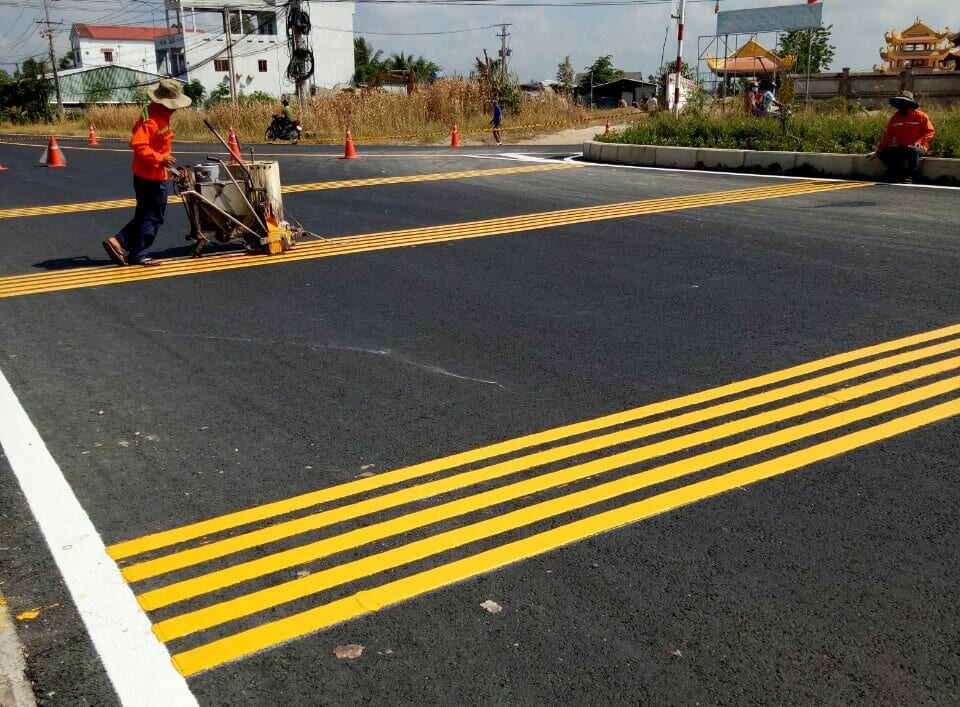
Thermoplastic reflective paint has a wide range of applications in creating safe and easily visible road markings in low-light conditions. Below are some examples of the applications of thermoplastic reflective paint and how enhanced reflectivity contributes to safety:
Road Traffic:
Thermoplastic reflective paint is used to create safe lane markings for vehicles traveling at night. Its reflective properties make it easier for drivers to identify directions and lane boundaries.
Airports:
Thermoplastic reflective paint is also applied at airports, particularly on runways and taxiways. Reflective road markings guide aircraft and ground vehicles safely in low-light conditions.
Industrial Areas:
In industrial areas or locations with transportation activities involving forklifts, thermoplastic reflective paint is used to mark safe paths for moving vehicles and pedestrians.
Urban and Commercial Centers:
In urban and commercial centers, the use of thermoplastic reflective paint creates a safe environment for pedestrians and traffic participants.
Calculating Enhanced Safety Reflectivity:
The reflective properties of thermoplastic paint cause road markings to reflect light, enhancing visibility at night. Reflectivity calculations typically depend on the intensity of light shining on the road marking and the amount of light reflected back. This is often measured using reflectance measurement equipment, and the result is expressed as a Reflectivity Level (RL) value.
When selecting thermoplastic reflective paint, checking the reflectivity level and reflective properties of the product ensures that road markings meet the necessary safety requirements in low-light conditions.
Advantages of Implementing Thermoplastic Reflective Paint:
Enhanced Safety: Thermoplastic reflective paint improves visibility, especially at night or in low-light conditions, enhancing road safety.
Durability: This type of paint is known for its durability, withstanding the wear and tear of traffic and weather conditions.
Longevity: Thermoplastic reflective paint maintains its reflective properties for an extended period, reducing the need for frequent maintenance.
Easy Application: It can be easily applied using heat, making the installation process efficient and quick.
Cost-Effective: Although initial costs may be higher than regular paint, its durability and longevity make it a cost-effective choice in the long run.
Environmental Benefits: Some thermoplastic paints are formulated to be environmentally friendly, with lower VOC emissions compared to solvent-based paints.
Overall, thermoplastic reflective paint plays a crucial role in improving road safety and visibility, making it a valuable choice for various applications.
Here is a step-by-step guide for the process of applying thermoplastic reflective paint

Step 1: Prepare Tools and Materials
Identify the Area: Determine the area that needs thermoplastic reflective paint to calculate the required amount of material.
High-Quality Thermoplastic Paint: Prepare high-quality thermoplastic reflective paint.
Equipment Preparation: Get a heat source, such as a heater, a water bath, and necessary tools like paint rollers, brushes, masking tape, etc.
Step 2: Thorough Surface Preparation and Assurance
Surface Inspection: Ensure that the surface you are going to paint is smooth, clean, and free from oil, grease, and dust.
Surface Repair: If there are any holes or cracks, perform necessary repairs before painting.
Step 3: Optional Application of Insulation and Reflective Layer
Insulation Coat (Optional): If needed, apply a high-quality insulation layer to enhance the insulation properties of the surface.
Application of Thermoplastic Reflective Paint: Next, apply the thermoplastic reflective paint evenly to the surface. Make sure to apply it uniformly without leaving any spots.
Step 4: Painting with Thermoplastic Reflective Paint
Dilution (if required): If the product instructions recommend it, dilute the paint according to the manufacturer's specifications.
First Coat:
Use a paint roller or brush to apply the first coat evenly on the surface.
Allow the paint to dry according to the product instructions.
Second Coat and Subsequent Coats:
Apply the second coat once the first coat has completely dried.
Repeat the process of applying additional coats until you achieve the desired thickness.
Step 5: Finishing and Inspection
Thorough Inspection: Inspect the painted surface carefully to ensure even coverage and no cracks, holes, or imperfections.
Complete Drying: Ensure that the paint has fully dried before further use or contact with the surface.
Step 6: Cleaning Tools and Equipment
Immediate Cleaning: Clean your painting tools and equipment immediately after use to prevent paint from hardening on them.
Proper Storage: Store any remaining materials following the manufacturer's instructions.
Note: Follow manufacturer guidelines and ensure personal protective equipment (PPE) is worn during the thermoplastic reflective paint application process to ensure safety for yourself and others.
Reliable and High-Quality Thermoplastic Paint Application Service
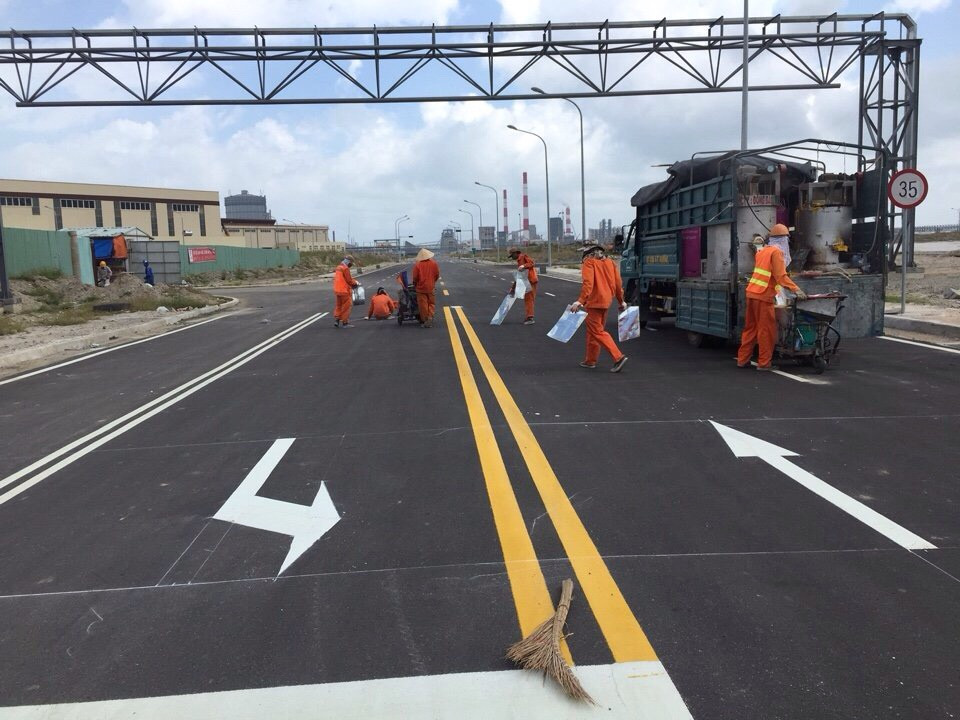
A reliable and high-quality thermoplastic paint application service plays a crucial role in protecting and enhancing the aesthetics and functionality of various construction projects. Thermoplastic paint, also known as heat-reflective paint, has the ability to reflect heat, reducing surface temperatures and saving cooling energy in tropical environments or high-temperature areas.
A reputable thermoplastic paint application service typically possesses the following characteristics:
Professionalism and High Technical Expertise: Such a service usually employs a team of highly skilled technicians with expertise in thermoplastic paint application. They have a deep understanding of the process, technology, and various heat-reflective paint materials.
Experience: A reliable service often has many years of experience in the field of thermoplastic paint application. This experience enables them to handle complex situations effectively and ensure the quality of their work.
Use of High-Quality Products: They use high-quality thermoplastic paint products from reputable manufacturers. This ensures that the heat-reflective surface maintains good performance and durability over time.
Professional Consultation: Experts within such a service are typically capable of providing professional advice to clients regarding product selection, color choices, and the appropriate application process tailored to the specific project requirements.
After-Sales Service: After completing the application, reputable services often offer after-sales services such as maintenance and necessary repairs to ensure that the painted surface maintains its performance and aesthetics.
Positive Customer Feedback: Assessing the credibility of a service can often be done by reviewing positive feedback from previous customers who have used their services. If possible, seek opinions from those who have previously used the service.
Reasonable Pricing Policies: While thermoplastic paint application may be more expensive than conventional paint, reputable services typically offer reasonable pricing that reflects the quality and value delivered to the customer.
Selecting a trustworthy and high-quality thermoplastic paint application service is a critical step to ensure that your project is protected and maintains its aesthetic appeal over an extended period. Take the time to research and choose a service provider with a good reputation and a track record of delivering quality work.
Contact Us:
CHI HAO TRADING AND SERVICES CO., LTD
Address:
Ho Chi Minh City Office: 606/76/4, National Highway 13, Ward Hiệp Bình Phước, Thu Duc District, Ho Chi Minh City
Can Tho Office: 388Z7 Lot 2, Zone 2, An Khanh Ward, Ninh Kieu District, Can Tho City
Cambodia Office: No 86E0 Street 139, Sangkat Vealvong Khan 7 Makara, Phnom Penh
Phone:
Ho Chi Minh City: 028 626 757 76
Can Tho: 0818 212 226
Cambodia: 855 12868178 / 855 70868178
Email: [email protected]