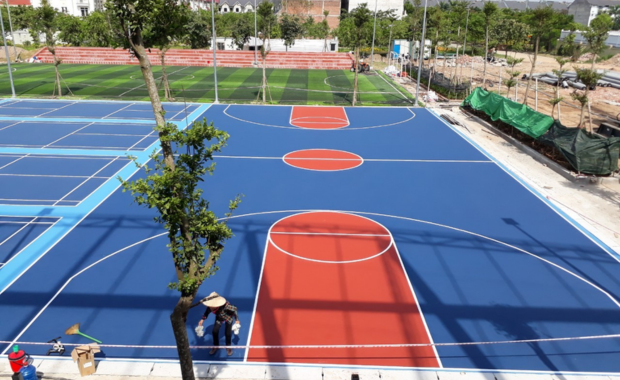
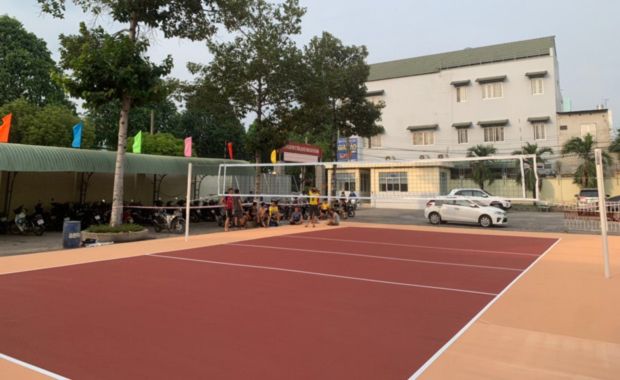
Main content
- Learn about traffic marking paint
- The difference between thermoplastic road marking paint and cold road marking paint
- The best road marking paints on the market today
- Instructions on the steps to apply reflective traffic marking paint
- Things to note when applying road marking paint
- THERMOPLASTIC ROAD SIGNING PAINT
- PAINTED YELLOW LINES
- REFLECTIVE ROAD SIGNING PAINT
- SOME STRING PAINT CONSTRUCTION PROCESSES
- BẢNG GIÁ SƠN GIAO THÔNG COLORI
- Reputable distributor of marking paint

Road marking paint is a specialized product line for traffic construction systems. With its special abilities, this paint line can withstand the harsh effects of weather. And to better understand the features of paint, please join us in learning the useful information below.
Learn about traffic marking paint

affic lights
Traffic markings are lines that indicate the division of lanes, positions or directions, and stopping locations that we often encounter during daily traffic.
Traffic marking paint is a special type of paint used to create lines and symbols on the road surface, to help enhance the ability to distinguish lanes, ensure traffic safety and support control. vehicles on the road.
Traffic marking paints often have the characteristics of being abrasion resistant, water resistant, resistant to sunlight and non-slip in different weather conditions. It can be used to create solid lines, vertical dotted lines, symbols, dividing lines and other traffic symbols.
The composition of traffic marking paint depends on the manufacturer, but usually includes acrylic resin, colorants, thickeners and other additives.
Traffic marking paint is divided into 2 main lines:
- Thermoplastic marking paint.
- Cold line paint.
The difference between thermoplastic road marking paint and cold road marking paint
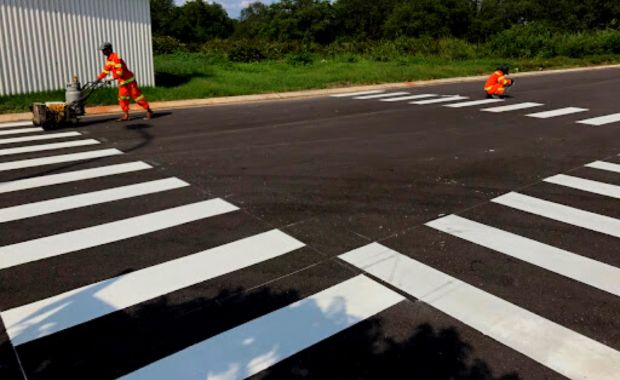
Road marking paint
Road marking paint can be divided into two main types: thermoplastic road marking paint and cold road marking paint. Here are the differences between these two types of paint:
1. Operating principle
- Thermoplastic road marking paint is activated by temperature and, when applied to the road surface, reacts to the temperature and forms a strong bond with the road surface. This makes the paint more resistant to high temperatures and more durable than cold road marking paint.
- Cold road marking paint uses a drying method to form a bond with the road surface, without the need for activation by temperature. The paint is used at room temperature and bonded by distillation of the dry solvent.
2. Technical characteristics
- Thermoplastic road marking paint has good adhesion, high durability and can withstand the impact of high temperatures. However, it requires complex road painting techniques and is more expensive than cold road marking paint.
- Cold road marking paint can be applied on a variety of road surfaces and requires simpler painting techniques. However, the durability and adhesion are lower than thermoplastic road marking paint.
3. Application
- Thermoplastic road marking paint is often used on highways and overpasses, ensuring safety and durability in harsh weather conditions.
- Cold road marking paint is often used on roads with low speeds, good surface flatness and little impact from traffic.
The best road marking paints on the market today

Types of road marking paint
On the traffic paint market today, there are many diverse products with different competitive prices. Typical examples include the following types of traffic road marking paint:
- Nippon traffic road marking paint (non-reflective or reflective): has 4 colors: white, yellow, red, black. Packaging 5L/can. Weight depending on color is about 6.5-7kg/can. Coverage rate ~25m2/can.
- Durgo traffic road marking paint (non-reflective or reflective): has 5 colors: white, yellow, red, black, blue. Packaging 5Kg/can. Coverage rate ~20-22m2/can.
- Joway traffic paint (non-reflective or reflective): Joway traffic paint has 4 colors: white, yellow, red, black. Packaging 5Kg/can. Coverage rate ~20-22m2/can.
- Eagle traffic road marking paint (non-reflective), also known as Eagle pavement paint: has 4 colors: white, yellow, red, black. Packaging: black 2.5Kg/can; yellow 3Kg/can. Coverage rate ~15m2/can.
- Kova traffic road marking paint (non-reflective): has 4 colors: white, yellow, red, black. Packaging: black 4Kg/can and 20Kg/carton. Coverage rate is 4-5m2/kg.
- Joline thermoplastic paint (non-reflective): has 2 colors: white, yellow. Packed 25Kg/bag. Coverage rate is 3.5-3.8kg/m2. Construction by machine.
- Kova thermoplastic paint (non-reflective): has 2 colors: white, yellow. Packed 25Kg/bag. Coverage rate is 3.5-3.8kg/m2. Construction by machine.
Instructions on the steps to apply reflective traffic marking paint
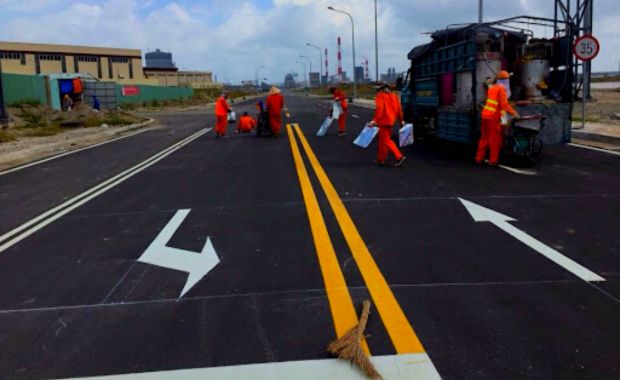
Instructions on the steps to apply line paint
To apply reflective traffic marking paint, you can follow these steps:
Step 1: Prepare the surface
- Make sure the surface is clean, dry and free of grease and dirt.
- Surface treatment to remove any surface irregularities by polishing or sanding.
Step 2: Clean the surface
- Use a brush to clean the surface, removing all dust, sand and other materials.
- Use solvent to clean the surface.
Step 3: Apply primer
- Paint the primer with normal striping paint over the entire surface to be striped.
Step 4: Apply reflective traffic marking paint
- Use tape to draw lines and areas that need traffic reflective paint.
- Use reflective marking paint and roll it over the lines to be painted, avoid creating too many coats of paint on one area and ensure the paint is evenly covered on the surface.
- Wait for the paint to dry completely before using the surface.
Step 5: Maintenance and inspection
- Check the paint after it has dried to make sure it is evenly applied and that there are no blemishes.
- Maintain reflective markings regularly to ensure that they will maintain their reflective properties.
>> See more: Instructions Colori sports field painting construction.
Things to note when applying road marking paint

Things to note when applying road marking paint
When performing traffic road marking painting, the following points should be noted to ensure effectiveness and safety:
- Prepare adequate materials and equipment: Make sure to have enough paint, tools and equipment necessary to perform line painting.
- Check the surface: Before starting to paint, the road surface must be checked to ensure the surface is flat, without cracks or grooves. If any, it must be treated before painting.
- Protecting labor safety: When painting road markings, you must wear full labor protection equipment such as helmets, reflective vests, gloves, goggles,...
- Use appropriate paint: Paint used to paint road markings must meet technical standards for adhesion, reflectivity, color fastness,...
- Apply road markings properly: Road markings should be painted according to the manufacturer's instructions or according to prescribed technical standards to ensure clarity and durability of the paint.
- Ensuring traffic safety: During the process of painting road markings, it is necessary to take safety measures, set up barriers and signs to ensure the safety of traffic participants.
- Maintenance after painting: After painting road markings, regular maintenance is required to maintain the durability and reflectivity of the paint. If any damage is detected, it must be repaired promptly to avoid further damage.
THERMOPLASTIC ROAD SIGNING PAINT
Thermoplastic road marking paint: is a type of paint used to mark lines on road surfaces. It has good heat resistance and elasticity, helping to maintain clear and durable lines in harsh weather conditions.
Characteristics of thermoplastic road marking paint
- Good heat resistance: Thermoplastic road marking paint is designed to withstand high temperature conditions, ensuring no deformation or fading due to the impact of environmental temperature.
- Strong adhesion: The paint has the ability to adhere well to the concrete surface, helping to create strong and durable lines over time.
- High mechanical durability: The paint can withstand impacts, loads from vehicles and other factors during use without cracking or being damaged.
- Anti-slip ability: The paint has anti-slip properties, helping to increase safety for vehicles and traffic participants.
- Waterproof ability: The paint is waterproof, helping to prevent water from seeping into the road surface and increasing the life of the markings.
- Durable color: Paint has the ability to retain color for a long time, not fading under the influence of sunlight and weather.
- Fast drying time: Thermoplastic road marking paint often has a quick drying time, helping to shorten construction time and quickly reuse the road.
Application of thermoplastic road marking paint
- Road markings for highways, national highways, and provincial roads.
- Line marking of industrial zones, urban areas and inside manufacturing plants.
- Airport markings mark areas such as terminals, internal roads, runways and parking lots.
- Line up resorts, ecotourism, supermarkets, shopping centers and ports.
- Marking internal roads of agencies, schools, hospitals and public parking lots.
Benefits of using thermoplastic road marking paint
- High adhesion: The paint has strong adhesion, making road markings durable and resistant to peeling, especially in high temperature conditions.
- Good heat resistance: The paint has high heat resistance, helping to maintain the clarity and sharpness of road markings even when exposed to high temperatures.
- Anti-abrasion and dust: The paint has anti-abrasion properties, helping road markings not fade or lose clarity after a period of use and preventing dust from sticking to the road surface.
- High durability: Thermoplastic road marking paint creates durable road markings, extending the life of the markings and minimizing the need for frequent re-marking.
- Traffic safety: The use of road marking paint helps increase traffic safety by creating clear and recognizable road markings for vehicles participating in traffic.
- Cost savings: Based on durability and anti-wear properties, it helps save more maintenance and repair costs during road maintenance.
- Easy to apply: Thermoplastic road marking paint is easy to apply, dries quickly and can be used in a variety of weather conditions.
PAINTED YELLOW LINES
Yellow marking paint: is a yellow paint used to mark on surfaces such as streets, parking lots, or other traffic areas.
Characteristics of yellow line paint
- Strong adhesion: Yellow road marking paint has the ability to adhere tightly to the road surface, helping to create sharp and durable lines over time.
- Outstanding color: Yellow is a bright and prominent color, helping to enhance the recognition and guidance of markings, especially in low light conditions or at night.
- Anti-slip: The paint has anti-slip properties, helping to ensure safety for vehicles and traffic participants, especially in wet weather conditions.
- Abrasion and impact resistance: Yellow striping paint is designed to withstand abrasion from vehicle traffic and impacts from other elements in the road environment.
- Good color fastness: Paint has the ability to keep its color for a long time, not fading under the influence of sunlight and weather.
- Fast drying time: Yellow marking paint often has a quick drying time, helping to shorten construction time and use of the road after marking.
- Mechanical durability: Paint has the ability to withstand loads from vehicles and other factors during use without cracking or being damaged.
Applying yellow line paint
- Traffic safety: Used to mark road markings, medians and dangerous areas such as turns, stops, and crosswalks. With its striking colors, it helps increase visibility and reduce the risk of accidents.
- Guidance and navigation: Paint is used to mark directions and directions in parking lots, docks, stations and public areas, helping users find the right location.
- Public areas and facilities: It is often applied in areas such as stations, airports, hospitals, schools, supermarkets and sports facilities to create highlights and increase the aesthetics of the space. .
- Warning and safety: Used to mark dangerous areas, prohibited or restricted zones, such as railway tracks, emergency doors, mines, to support people's safety.
- Designate special locations: Yellow road marking paint is often used to mark the location of fire protection equipment, escape systems and other important equipment.
Benefits of using yellow line paint
- Enhance recognition: Yellow is prominent and easy to see, helping to make road markings stand out, especially in bad weather conditions such as fog and rain.
- Danger warnings: Yellow is often used to mark areas that are dangerous or require special attention such as curve markings, cross-section areas, and speed limit zones.
- Enhance traffic safety: Yellow lines help increase safety for traffic participants, especially drivers and pedestrians.
- Easy to recognize direction: Yellow line paint is also used to mark direction, helping drivers easily follow the correct lane and direction of travel.
- Stabilize traffic flow: Yellow lines help divide lanes, direct traffic flow, help reduce congestion and increase traffic efficiency.
- Note no stopping and parking zones: Yellow is also often used to mark no stopping and parking zones, helping to create clarity and compliance with regulations.
REFLECTIVE ROAD SIGNING PAINT
Reflective road marking paint: is a type of paint used to mark roads and has the ability to reflect light. When light hits the painted surface, it reflects back, helping to brighten and enhance the visibility of road markings at night or in low light conditions.
Reflective road markings are often used to clarify road boundaries and enhance traffic safety, especially in low light conditions.
Characteristics of reflective road marking paint
- Highly reflective: This is an outstanding feature of reflective road paint. When illuminated, this paint reflects light back to the source, creating a bright reflective effect, helping to enhance visibility and orientation on the road at night.
- High durability: Reflective road marking paint is designed to withstand the impact of traffic and harsh weather, ensuring durability and maintaining reflective effectiveness for a long time.
- Traffic safety: Road markings play an important role in enhancing traffic safety, especially at night or in low light conditions. The bright reflective effect will help drivers recognize and recognize road markings more easily, reducing the risk of accidents.
- Bright colors: Paint in bright colors such as white or yellow to create a strong reflective effect, while also helping to create contrast with road colors, highlighting lines and signs.
- Fast drying time: The paint has a quick drying time, helping to shorten construction time and use the road after marking.
- Abrasion and impact resistance: Reflective road marking paint is formulated to withstand abrasion from vehicle traffic and impacts from other elements in the road environment, ensuring its reflective properties are retained. light for long periods of time.
- Diverse uses: Reflective road markings can be used for road markings, signs, road cones and other traffic elements, helping to increase the efficiency and safety of the traffic system.
Application of reflective road paint
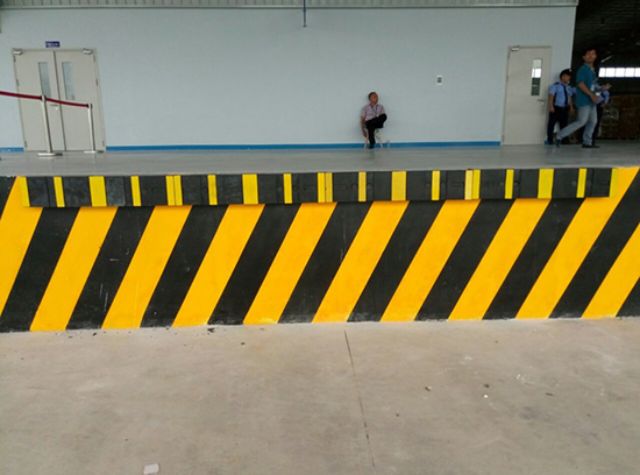
Reflective road markings are a reliable solution to improve traffic safety, especially in low light conditions. Reflective road marking paint applications can be seen in many different locations on roads and infrastructure, such as:
- Road markings: Paint is used to draw road markings, lane markings, signs and traffic symbols, helping to enhance driver identification and guidance, especially at night.
- Area markings: In addition to road markings, reflective paint is also used to create markings to designate safe areas, such as lane markings, ambulance lanes, skid-stop zones, isolation zones, and other areas. other important areas.
- Airports and runways: On runways and areas of airports, reflective paint is applied to enhance brightness and support safe landing and takeoff operations.
- Rail and road: In the public transport sector, reflective road paint helps improve safety for passengers and drivers, especially in busy or dark areas.
- Ports and urban transportation systems: Paint is used to enhance safety in urban areas, such as ports, bridges, residential areas, commercial areas and city centers.
Reflective road markings not only help create highlights and highlight important locations on roads, but also ensure traffic safety and reduce accident risks, bringing significant benefits to the community. and society.
Benefits of using reflective road paint
- Enhance traffic safety at night: The paint has the ability to glow in the dark or in low light conditions, helping to increase the ability to see and identify road markings at night.
- Danger warning: Reflective road marking paint is used to mark dangerous areas, important points or need special attention, helping to warn drivers and traffic participants about the existence of dangerous substances. Obstacles, curves, speed restricted areas, etc.
- Enhance visibility: Reflective road paint helps highlight road markings, especially in bad weather conditions such as fog or rain, increasing visibility and reducing the risk of accidents.
- Meets traffic standards: Reflective road marking paint meets traffic standards, ensuring the quality and effectiveness of road markings.
- Economic and sustainable: The paint is highly durable, prolonging the life of road markings, helping to save maintenance costs and maintain traffic efficiency in the long term.
- Reduce traffic accidents: Thanks to the reflective feature, road markings help reduce the risk of traffic accidents, especially in low light conditions.
SOME STRING PAINT CONSTRUCTION PROCESSES
CONSTRUCTION PROCESS OF WAREHOUSE SCREENING PAINT
In applying striping paint to warehouses, an accurate and meticulous process is extremely important to ensure beautiful and high-quality results. Below are instructions on the detailed warehouse marking painting process:
STEP 1: SURFACE PREPARATION
Warehouse surfaces need to be thoroughly cleaned of dust, grease, and other contaminants. Use means such as a vacuum cleaner, soap, or special cleaning solutions if necessary.
Check and repair cracks, holes or damage (if any).
STEP 2: MARK AND LINE
Use tape or marking tools to outline the necessary lines and geometry on the shed surface.
Be sure to measure and align carefully to ensure the lines are even and in the correct position.
STEP 3: MIX AND MIX PAINT
Before applying, prepare and mix the paint according to the manufacturer's instructions to ensure the quality and effectiveness of the striping paint.
STEP 4: CONSTRUCTION OF STRING PAINT
Use suitable tools such as a serrated squeegee or paint sprayer to apply line paint on the marked lines.
Make sure the paint is applied evenly and does not melt or clump on the surface.
STEP 5: CHECK AND FINISH
After completing the application, check the lines to ensure they are even and accurate.
If necessary, make repairs or adjustments to achieve optimal results.
STEP 6: DRYING AND FINISHING TIME
To ensure the striping paint dries completely and lasts, adhere to the manufacturer's instructions for drying time.
Once the paint is completely dry, remove the tape or marking tool and complete the application.
CONSTRUCTION PROCESS OF STANDARD THERMOPLSTIC ROAD PAINTING
STEP 1: SURFACE PREPARATION
Inspect and evaluate road surface condition, removing obstructions such as grease, dirt, cracks, and wear.
Clean road surfaces using methods such as wetting, mowing, pumping, and mopping.
Make sure the road surface is dry and free of water.
STEP 2: CHECK WEATHER CONDITIONS FOR CONSTRUCTION
Choose a construction day with suitable weather conditions, no rain, no freezing or too high temperatures.
Ensure stable weather conditions throughout construction and seal the area to protect from outside elements.
STEP 3: APPLY FLOOR PAINT
Prepare and spread base paint on the road surface, using paint with heat-resistant and anti-slip properties.
Make sure the base coat is completely dry before proceeding to the next step.
STEP 4: APPLY THERMOPLASTIC ROAD SIGNING PAINT

Spread thermoplastic road marking paint according to pre-designed and guided lines.
Use specialized tools such as thermoplastic liners to ensure the clarity, regularity and accuracy of lines.
Make sure the line is completed quickly to avoid temperature changes and ensure consistency throughout the route.
STEP 5: FINISH
Allow the road marking paint to dry for the specified amount of time according to the manufacturer's instructions.
Inspect and conduct periodic maintenance to maintain durability, quality and clarity of lines after completion.
DETAILED CONSTRUCTION PROCESS OF BASEMENT SCREENING PAINT
STEP 1: SURFACE PREPARATION
Clean and remove all dirt, grease, and other dirt from the basement floor surface. Make sure the surface is completely clean before painting.
STEP 2: MARK AND POSITION
Use tape and technical drawings to mark and determine the position and size of the lines. Make sure the lines are the correct size and parallel.
STEP 3: BACKGROUND PAINT (OPTIONAL)
In some cases, it is necessary to paint the base before painting the lines. Base paint helps increase adhesion and durability of line paint.
STEP 4: CONSTRUCTION OF STRING PAINT
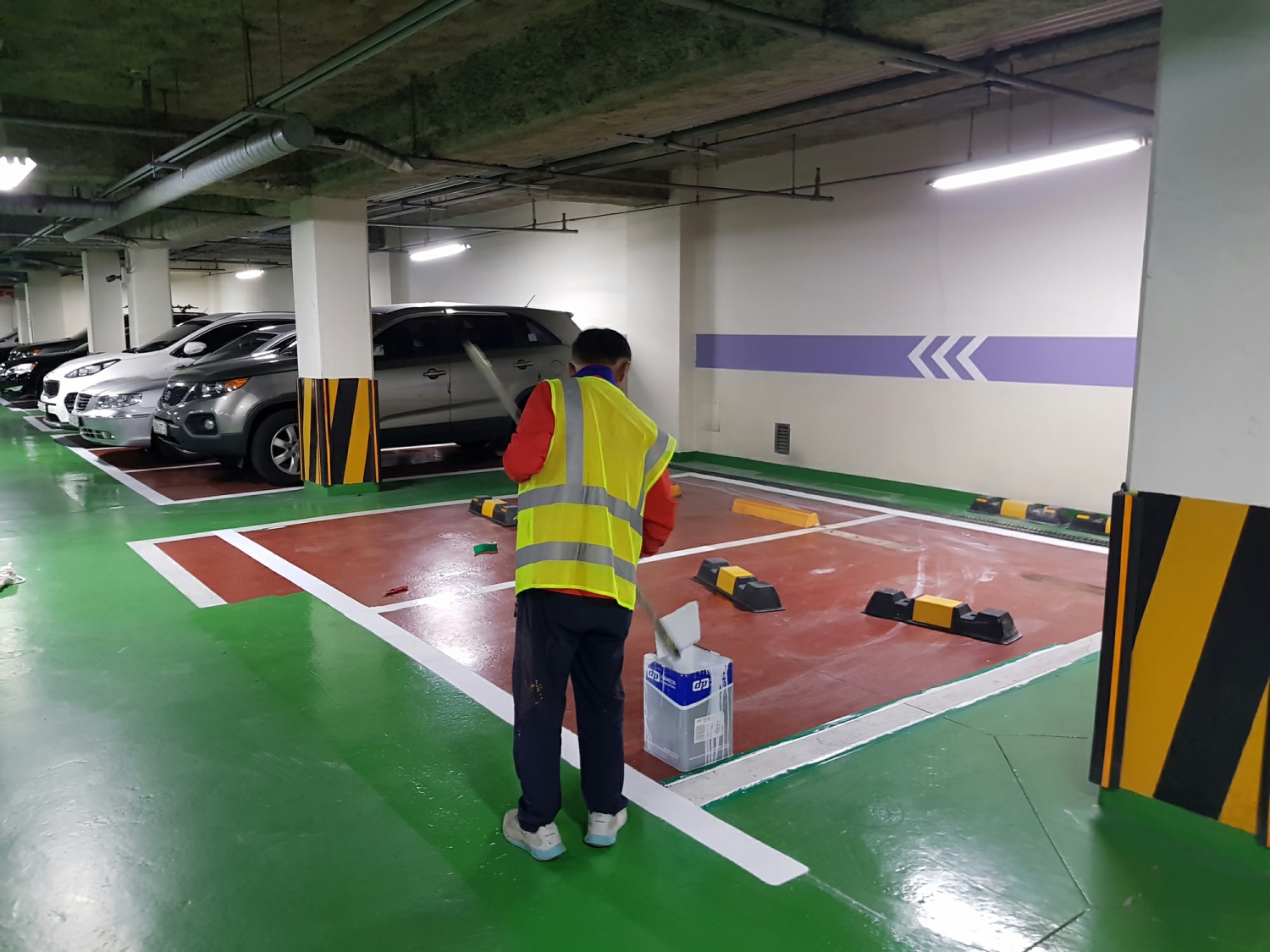
Use the correct color marking paint according to the marked positioning and dimensions. Line painting can be done using spray paint technology or hand painting, depending on the scale and requirements of the project.
STEP 5: COMPLETE IMPLEMENTATION
After painting the lines, check and edit if necessary to ensure the thickness and accuracy of the lines. Perform final finishing to create a perfect basement floor surface.
STEP 6: DRYING AND HANDING TIME
To ensure adhesion and durability of the striping paint, it is important to wait for the paint to dry completely before using.
The specific drying time will depend on the type of paint and weather conditions at the construction site. Ensuring compliance with the correct drying time is an important factor in achieving the best paint quality and ensuring the effectiveness of road marking.
STEP 7: HANDOVER OF THE WORK
After the striping paint has completely dried and achieved the required quality, the project will be handed over and ready for use.
CONSTRUCTION PROCESS OF CONCRETE FLOOR SCREENING PAINT
STEP 1: INSPECT AND PREPARE THE CONCRETE SURFACE
Inspect the concrete surface for cracks, holes or damage that could affect the quality of construction.
Clean the concrete surface by grouting or scrubbing to remove dust, grease and other dirt.
STEP 2: MARK AND POSITION
Use ligatures or marking motors to mark the position and size of the lines that need to be constructed.
STEP 3: CHOOSE TYPE OF PAINT
Choose the type of marking paint suitable for the intended use, environment and technical characteristics of the concrete surface.
STEP 4: MIX AND CHECK THE PAINT
Mix striping paint according to manufacturer's ratios and instructions to ensure satisfactory color and quality.
Check the paint after mixing to ensure there are no impurities or bumps.
STEP 5: CONSTRUCTION OF STRING PAINT
Use a paint sprayer or specialized brush to apply striped paint on the concrete surface.
Make sure the paint is coated evenly and reaches the desired thickness.
STEP 6: CHECK AND EDIT
Check the results after construction to ensure the accuracy and beauty of the line.
Retouch if necessary to ensure sharpness and uniformity of the line paint.
STEP 7: PRESERVE AND DRY THE PAINT
Avoid contact with the markings by vehicles or pedestrians for the time necessary for the paint to dry completely and reach mechanical strength.
STEP 8: FINISHING AND MAINTENANCE
After the paint has completely dried, recheck the markings and perform periodic maintenance to maintain the properties and durability of the marking paint.
BẢNG GIÁ SƠN GIAO THÔNG COLORI
Below is a reference line paint price list for you to be able to plan your costs. For more information and detailed quotes, you can contact us via hotline: 0818 212 226.
| Numerical order | PRODUCT'S NAME | PRODUCT CODE | SPECIFICATIONS | REFERENCE PRICE |
|
1 |
Solvent-based Colori line paint (red, yellow, blue, white, black) |
CD_KV100 |
05 Kg |
$33,01 |
|
20 Kg |
$129,48 |
|||
|
2 |
Colori water-based line paint (red, yellow, blue, white, black) |
CD_KV200 |
05 Liters |
$52,12 |
| 18 Liters |
$164,46 |
|||
|
3 |
Colori line paint solvent |
CD_H101 |
05 Liters |
$18,44 |
|
20 Liters |
$67,09 |
Reputable distributor of marking paint
We have many years of experience in the field of paint supply, the product lines we provide to customers are of guaranteed quality and have clear origins. You can contact us immediately for free consultation on product information as well as the latest price list.
Contact Info:
CHI HAO TRADING SERVICE COMPANY LIMITED
Address: 606/76/4 National Highway 13, Hiep Binh Phuoc Ward, City. Thu Duc, City. Ho Chi Minh
Phone: 028 626 757 76 – Fax: 028 626 757 28
Mobile: 0903 11 22 26 – 0903 61 22 26 – 0903 08 52 66 – 0903 17 22 26
Email: [email protected]